
Why Employee Self-Service Is No Longer Optional in HRMS Benefits, Best Practices, and Implementation Guide for 2025
The Age of HR Digital Empowerment
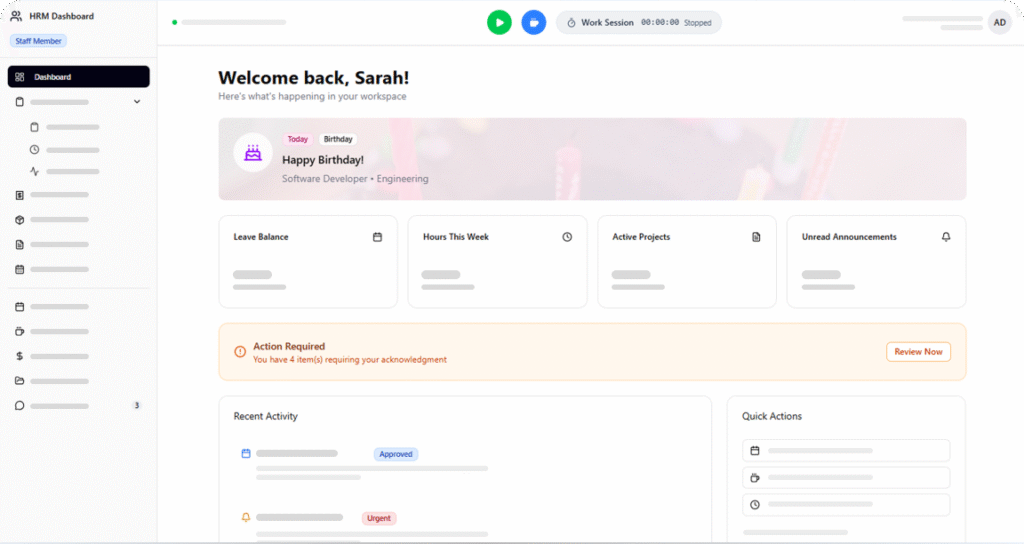
Human Resources stands at the intersection of operational efficiency and employee empowerment. As organizations in 2025 embrace digital transformation, Employee Self-Service ESS) portals in HRMS platforms are no longer a luxury—they are a necessity. For businesses choosing not to adopt certain advanced features like recruitment automation, ESS has become the biggest driver of HR digitization, operational compliance, and workforce satisfaction.
In this in-depth guide, weʼll explore why ESS is indispensable, break down its strategic and practical benefits, offer a detailed roadmap for successful implementation (even in environments without recruitment automation), and showcase how OxHRM delivers an ESS experience built for the evolving demands of the modern workplace.
The Shift to Employee Self-Service—A Paradigm Change in HR
From Centralized Control to Empowered Employees
Historically, HR departments controlled information, managed transactions, and communicated changes using manual processes and top-down communication. This structure created administrative bottlenecks: employees depended on HR for every small request—from updating mailing addresses to checking payslips or requesting leave.
In the 2020s—especially post-pandemic—remote, hybrid, and global workforce models expanded. With these changes, immediate access to HR services, digital compliance, and real time data accuracy became paramount. Employee Self-Service modules directly address these
needs by:
- Giving employees the tools to manage their own HR transactions.
- Allowing HR teams to refocus on strategic work rather than repetitive admin tasks.
- Increasing transparency, trust, and engagement across the organization.
ESS Core Pillar in Every Modern HRMS
Even for businesses without a recruitment automation system, ESS delivers significant value in every aspect of the employee lifecycle—from onboarding and document management to payroll access and performance feedback. In 2025, forward-thinking companies see ESS as essential for:
- Digital transformation initiatives.
- Policy adherence and statutory compliance.
- Building a culture of autonomy and respect.
Business Benefits of ESS Transforming the Employee Experience
Time and Cost Savings
Routine HR interactions (like requesting leave or updating bank details) no longer require time consuming HR intervention. Employees serve themselves, and automated workflows take care of approvals, notifications, and records updates. This leads to:
- Drastic reductions in HR team workload.
- Higher process throughput and faster turnarounds for employees.
- Lower costs—fewer manual errors and paper-based administration.
Improved Data Accuracy and Compliance
ESS allows employees to update their own personal information, which means data is less likely to be outdated or incorrect. This is crucial for:
Why Does Scalability Matter in HR Software for Businesses?
ESS allows employees to update their own personal information, which means data is less likely to be outdated or incorrect. This is crucial for:
- Meeting compliance standards (labor laws, privacy regulations).
- Ensuring records are audit-ready at all times.
- Avoiding legal/dispute risks due to inaccurate records.
With OxHRM and comparable HRMS platforms, digital data capture ensures every change is
logged, auditable, and maintained securely.
Empowered and Engaged Workforce
Giving staff direct access to their data has a powerful psychological effect:
- Employees feel trusted and respected.
- Transparency in HR processes builds confidence.
- Employees can plan leaves, check benefits, or download payslips anytime—no waiting for HR responses.
Enhanced Operational Flexibility
Especially in remote or hybrid businesses, self-service portals and mobile HR accessibility are game changers. Staff can submit leave, update records, participate in digital policy acknowledgments, and more—no matter where they are.
Foundation for a Future-Ready Organization
ESS is not just “nice to have”—it’s the essential baseline for digital HR. It lays the groundwork for more advanced analytics, automation, and employee engagement tools as your organization evolves.

Key Features to Demand in a 2025 ESS Portal
Not all ESS platforms are created equal. For robust value, ensure your HRMS offers:
Digital Document Management
- Upload, retrieve, view, and electronically sign important HR and legal documents.
- Centralized, secure, and audit-friendly storage.
Self-Service for Core Transactions
- Leave Requests: Submit, edit, track leave balances, and receive automated approvals/notifications.
- Attendance Tracking: View time-in/time-out records, refresh attendance summaries, track overtime or absences.
- Payslip and Payroll Data Access: Instantly download payslips, see deductions and benefits, and update banking info independently.
Access to Company Policies and Knowledge
- Easily available employee handbooks, policies, and forms.
- Track required acknowledgments for compliance (e.g., annual policy acceptance).
Personal Record Management
- Employees update contact details, addresses, emergency contacts, beneficiary designations, and more.
- Real-time visibility into changes and audit history.
Security and Privacy Controls
- Role-based authentication and access.
- Data encryption at rest and in transit.
- Full compliance with GDPR and local privacy laws.
Mobile Compatibility
- A responsive ESS portal or mobile app guarantees HR services anytime, anywhere—a must for deskless or global teams.
Implementing ESS Without Recruitment Automation—A Detailed Roadmap
Launching ESS in a business environment focused on core HR automation requires careful planning and employee-centric change management:
Needs Assessment and Stakeholder Alignment
- Survey HR processes; identify manual touchpoints that can shift to self-service.
- Involve employee representatives, IT, and legal for early buy-in.
- Map out feature priorities (leave, payroll, attendance, compliance docs).
Technology Selection and Configuration
- Choose an HRMS—like OxHRM—with proven, secure, easy-to-navigate ESS modules.
- Customize roles and access controls.
- Configure process flows (e.g., leave approval steps; policy acknowledgment reminders).
Comprehensive Training and Support
- Design hands-on training sessions for all employees on using ESS features.
- Produce user guides, explainer videos, and FAQs.
- Offer live support channels (email, chat, phone) for early troubleshooting.
Phased Rollout with Measurable Milestones
- Start with high-impact, high-usage modules (e.g., leave, attendance, payslips).
- Roll out additional features (policy hubs, personal info updates, document e-signatures) in subsequent phases.
- Track utilization and feedback at every stage.
Change Communications and Engagement
- Clearly communicate “what’s changing, why, and how it benefits employees.”
- Highlight time savings, greater transparency, and control as core value propositions.
- Spotlight early success stories or testimonials from pilot users.
Feedback Loops, Iteration, and Continuous Improvement
- Encourage ongoing user feedback—use pulse surveys or open office hours.
- Tweak workflows, screens, or notifications based on end-user suggestions.
- Regularly review compliance risks and update modules as laws and policies evolve.
How OxHRMʼs ESS Sets You Up for Success
With businesses prioritizing automation of core HR (not recruitment), OxHRMʼs ESS offers:
Streamlined Leave and Attendance Management
- Employees submit leave requests, supervisors approve or deny, and everyone is instantly notified.
- Transparent tracking means fewer disputes over balances or accruals.
- Mobile- and desktop-friendly—easy for every type of workforce.
Payslip and Payroll Access—Anytime
- No more waiting for HR or finance! Employees download current and historical payslips, review deductions, and manage banking details at will.
- Automated notifications alert users to new payslips or payroll changes.
Real-Time Policy and Document Access
- All company policies, forms, and compliance documents are at employeesʼ fingertips.
- Digital acknowledgment workflows ensure regulatory deadlines are always met.
Self-Update of Personal Data
- Employees keep their own records up-to-date—address, emergency contacts, document renewals.
- OxHRM tracks all edits, ensuring auditability and streamlined communication in critical situations.
Robust Security and Privacy Safeguards
- OxHRM employs the latest security protocols, access controls, and compliance monitoring.
- Employees always know their data privacy is protected.
Cloud-Based and Mobile-Optimized Experience
- Whether on laptop, tablet, or smartphone, users experience the same ease and speed.
- Ideal for decentralized, hybrid, or field teams.
Efficiency Testimonials and Real-World Results
- Many OxHRM users highlight dramatic drops in HR admin time, rapid leave processing, and higher employee satisfaction ratings.
- Reduced HR inquiry volume means teams can finally focus on higher-value strategies.

Addressing Common Concerns—Making ESS Work for Everyone
What about employees who arenʼt tech-savvy?
Train thoroughly, offer walk-in support sessions, and design your ESS portal for maximum simplicity—big buttons, clear instructions, minimal jargon.
Is ESS secure enough for sensitive data?
With OxHRMʼs best-in-class encryption, robust access controls, and compliance certifications, your employee data is safer than with paper or legacy systems.
Will ESS make HR less personal?
On the contrary, self-service lets HR staff redirect their energy toward mentoring, workforce development, and resolving complex issues, leading to a more personal and impactful HR function.
What if we expand and eventually want recruitment automation?
ESS is the digital backbone on which additional modules (like automated recruitment) can be built. Start with self-service and upgrade as your business grows.
The Strategic Future—Why ESS is Here to Stay
The surge in ESS adoption isnʼt surprising. As digital literacy increases and expectations for instant access soar, HR departments of the future will be judged on their ability to deliver seamless, transparent, and flexible employee services. Key drivers:
- Changing Workforce Demographics: Younger, tech-forward employees expect digital-first HR solutions.
- Business Continuity and Resilience: ESS ensures uninterrupted HR services in any situation (remote work, lockdowns, rapid expansion).
- Globalization: Diverse and distributed teams need 24/7, location-independent HR access.
- Data-Driven Strategies: Automation via ESS underpins every metric, analytic, and strategic recommendation HR delivers.
By implementing and maximizing the use of ESS, your organization positions itself as a competitive, future-ready employer—delivering on the promise of digital transformation and employee empowerment.
Case Example—ESS Adoption in Action with OxHRM
A Large Manufacturing Company Case
The challenge: Time-consuming paperwork, frequent payroll and leave disputes, low HR visibility.
The solution: Roll out OxHRMʼs ESS focusing first on time-off requests, payslip downloads, and policy access.
The result: Within six months, HR inquiry volume dropped by 70%. Employees completed 85% of HR transactions without intervention. Payroll and leave errors virtually eliminated. Confidence and engagement metrics improved company-wide.
A Fast-Growing IT Firm Case
- The challenge: Scaling HR operations during massive headcount growth, all with a lean HR team.
- The solution: Implemented OxHRMʼs ESS and mobile app to manage employee self-service during onboarding, leave, and attendance.
- The result: Seamless, scalable HR processes—even as employee numbers doubled. HR spent more time on retention and culture-building, less on admin.
Conclusion: Empower Your Workforce—Start with ESS
Employee Self-Service isnʼt just another HR trend. In 2025, it is the foundation of a digital, compliant, and people-focused HR function—especially for businesses maximizing automation in core HR and waiting to adopt advanced tools like recruitment automation.
By choosing a modern HRMS like OxHRM with robust ESS features, your organization gains:
- Efficient, compliant, streamlined HR operations.
- Empowered, satisfied employees who trust HR.
- A flexible, future-proof digital HR infrastructure.
Are you ready to make the shift? ESS is the first—and most crucial—step toward the agile, empowered, and resilient workplace of the future. Embrace it and position your organization among the leaders as the digital era of work continues to unfold.
No matter the size or industry, the journey to HR excellence starts with putting the tools in your peopleʼs hands. Discover how OxHRM can help unlock the full potential of ESS for your business —today and tomorrow.

Table of Contents

Shafeeq Khan is a web developer who creates modern, responsive, and user-friendly websites with clean code and creative design
Latest Posts

10 Payroll Problems Killing Indian Startups (And HRMS Fixes That Work)
Problem 1: PF/ESI Registration Delays Issue: Startups hit 10+ employees but delay PF/ESI registration. Penalty: 25% interest + fines up...


Multi-State Payroll Calculator for Indian Startups (2026 Edition)
Why Every Startup Needs This Tool Indian startups now operate across states Jaipur HQ hires from Kota, remote workers from...

PF/ESI Audit Preparation Checklist for Indian Startups 2026
Why PF/ESI Audits Are Coming for You 2026 Reality: Labour inspectors now target startups with 10+ employees. Random audits, employee...