HR Compliance Checklist for Startups in India 2025 Laws, Documents, and How OxHRM Helps You Stay On Track
Why HR Compliance Matters from Day One
Many Indian startups focus on product, customers, and funding—and treat HR compliance as something to “fix later”. But labour non-compliance can trigger penalties, legal notices, funding delays, or even reputational damage. Even a small founding team must respect certain laws around wages, contracts, benefits, and record-keeping.
The good news: you donʼt need to be a legal expert to stay compliant if you start with the right structure, documents, and tools. This guide gives you a practical HR compliance checklist for 2025 and shows how using an HRMS like OxHRM reduces manual mistakes and keeps your business audit-ready.
1. Basic HR & Employee Documentation
Even before complex labour laws, get your documentation basics right:
- Appointment letters / employment contracts
- Updated employee master data (name, address, PAN, bank, nominee, etc.)
- Company policies: leave, attendance, code of conduct, POSH, data protection
- Onboarding forms and declarations (tax regime selection, investment proofs later, etc.)
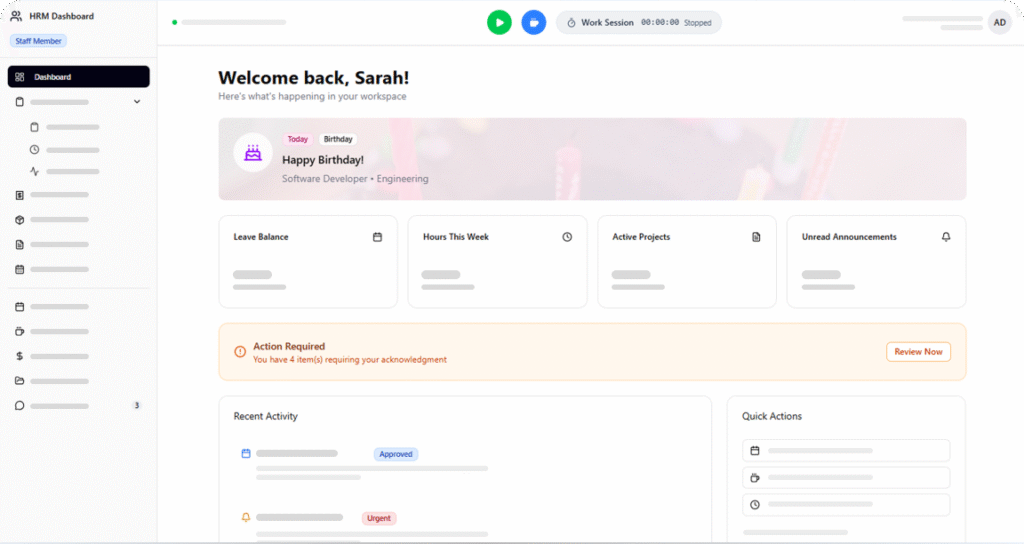
Store these centrally and securely. OxHRM lets you maintain a digital employee database with document uploads, version history, and role-based access.
2. Minimum Wages and Payment of Wages
Every state in India publishes minimum wage rates by role and category. You must ensure no employeeʼs basic wages fall below these thresholds. The Payment of Wages rules also regulate:
- Timely salary payment
- Deductions (allowed vs. not allowed)
- Payslip details
Even for small teams, ensure:
- You track working days correctly
- You maintain salary registers and digital payslips
- You honour minimum wages for your state and category
OxHRM automates salary calculations from configured structures and generates compliant payslips and registers.
3. Provident Fund PF Compliance
Once you cross the statutory employee threshold (usually 20 employees) or voluntarily enroll earlier, you must:
- Deduct and deposit PF contributions (employee + employer)
- Generate and submit PF challans on time
- Maintain UAN details and records
OxHRM simplifies PF compliance by:
- Configuring PF-eligible components
- Auto-calculating PF amounts in payroll
- Producing PF-ready reports for your accountant or compliance partner
4. Employee State Insurance ESI Compliance
For eligible salary brackets and covered establishments, ESI is mandatory. You must:
- Register under ESI when you meet the criteria
- Deduct and deposit contributions
- Maintain records and support employees in using ESI benefits
Through OxHRM, you can set up ESI eligibility rules and ensure correct calculation of contributions in each pay run.
5. TDS on Salaries and Income Tax Compliance
Even at startup scale, salary TDS canʼt be ignored. You must:
- Collect employee declarations (old vs new regime, investments, etc.)
- Estimate annual tax and deduct monthly TDS
- Provide Form 16 and maintain TDS working papers
- Coordinate with your CA for returns
OxHRM helps by:
- Storing employee declarations centrally
- Reflecting taxable components in payroll
- Allowing exportable TDS and payroll reports for your CA or finance team
6. Shops & Establishments and Other Local Registrations
Most startups need to register under the state-specific Shops and Establishments Act. Depending on your industry, you may also require other local labour and commercial registrations.
While OxHRM doesnʼt register you itself, it helps:
- Store registration certificates and renewal dates
- Track compliance tasks via reminders and notes
7. Leave, Working Hours, and Holiday Compliance
Indian labour rules and state notifications define:
- Maximum working hours per day/week
- Weekly offs and paid public holidays
- Leave entitlements (earned/privilege leave, maternity benefits, etc.)
A compliant setup includes:
- A clearly written leave and holiday policy
- Defined working hours and shifts
- Accurate attendance and leave tracking
OxHRMʼs attendance and leave modules ensure you have a digital trail of every working day, holiday, and leave taken, reducing disputes and audit stress.
8. POSH Prevention of Sexual Harassment) Compliance
All companies with 10+ employees must:
- Form an Internal Committee IC
- Have a written POSH policy
- Conduct regular awareness trainings
- Maintain records and submit annual POSH reports (where applicable)
You can:
- Host your POSH policy in OxHRMʼs digital handbook
- Track employee acknowledgments
- Maintain training completion records under each employee profile
9. Gratuity, Bonus, and Other Statutory Benefits
As your startup grows and meets specific age/size thresholds:
- The Payment of Bonus Act may apply (bonus for eligible employees).
- The Payment of Gratuity Act ensures gratuity after qualifying service.
OxHRM supports:
- Storing eligibility rules
- Tracking tenure
- Preparing gratuity and bonus computation reports for compliance execution
10. Record-Keeping and Audit Preparedness
Most HR and labour laws require you to maintain:
- Attendance registers
- Salary and deduction registers
- PF/ESI/TDS challans and receipts
- Employee records and contracts
- Leave and overtime logs
Manually saving files across drives and inboxes becomes chaotic. With OxHRM, all data— attendance, payroll, expenses, leaves, assets—is stored in structured, filterable, exportable formats you can share with auditors, investors, or authorities quickly.
HR Compliance Checklist for Startups 2025 Snapshot)
You can turn this into a downloadable checklist/lead magnet:
- Business registered and Shops & Establishments registration done (if required)
- Basic HR policies documented (attendance, leave, code of conduct, POSH
- Written appointment letters for all employees
- Digital employee database with KYC, PAN, bank details saved
- Salary structure designed with statutory components in mind
- Minimum wage compliance cross-checked for all roles
- PF registration and contributions (if threshold met/voluntary)
- ESI registration and contributions (if applicable)
- TDS process set up for salaries and declarations
- Attendance and leave digitally tracked
- Payslips issued monthly with all statutory details
- POSH policy and Internal Committee (if 10+ employees)
- Registers and documents stored centrally and backed up
- Reminders for renewal dates and periodic filings
How OxHRM Supports Your Compliance Journey
OxHRM doesnʼt replace your CA or legal advisor—but it makes their job (and yours) far easier by:
- Providing accurate, real-time HR and payroll data
- Maintaining auditable logs for attendance, salary, leave, and assets
- Generating standard reports needed for PF, ESI, and audits
- Centralizing employee documents, policies, and acknowledgments
- Reducing manual calculation errors and conflicting spreadsheets
For a busy founder or lean HR team, this means fewer last-minute scrambles, less risk, and more time to focus on business growth.
Conclusion: Build a Compliance-Ready Startup from Day One
HR compliance in India can look intimidating, but it becomes manageable when broken into clear steps and supported by the right system. With a simple, structured checklist and an HRMS like OxHRM, startups can avoid penalties, gain investor confidence, and build a culture of fairness and transparency.
If your startup wants to move from reactive “firefighting” to proactive, system-driven compliance, now is the time to act.
Try OxHRM or book a demo to see how easily you can centralize HR data, automate payroll logic, and stay ready for any audit or investor due diligence in 2025.
Table of Contents

Shafeeq Khan is a web developer who creates modern, responsive, and user-friendly websites with clean code and creative design
Latest Posts

10 Payroll Problems Killing Indian Startups (And HRMS Fixes That Work)
Problem 1: PF/ESI Registration Delays Issue: Startups hit 10+ employees but delay PF/ESI registration. Penalty: 25% interest + fines up...



Multi-State Payroll Calculator for Indian Startups (2026 Edition)
Why Every Startup Needs This Tool Indian startups now operate across states Jaipur HQ hires from Kota, remote workers from...

PF/ESI Audit Preparation Checklist for Indian Startups 2026
Why PF/ESI Audits Are Coming for You 2026 Reality: Labour inspectors now target startups with 10+ employees. Random audits, employee...