Salary Structure & Breakup for Startups in India 2025 Components, Examples, and How OxHRM Makes It Easy
Why a Clear Salary Structure Matters for Startups
For many Indian startups, hiring moves faster than HR setup. Founders agree on a “CTC number” in negotiations but donʼt define the breakup clearly. The result? Confusion about in-hand pay, tax, benefits, and increments. A poorly designed salary structure can create mistrust, non compliance, and messy payroll operations.
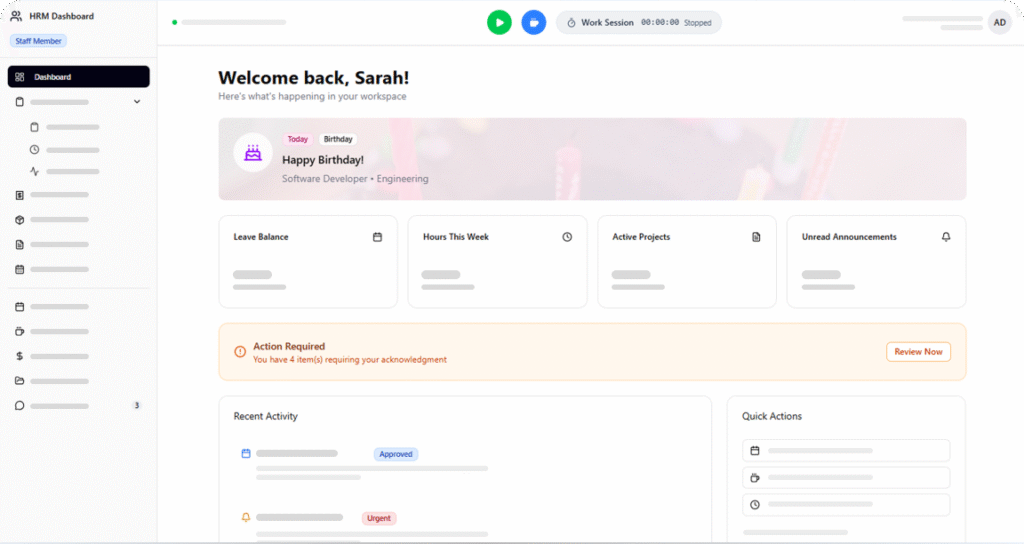
A clear, well-thought-out salary structure not only improves transparency and employee trust but also ensures you stay compliant with minimum wage, PF, ESI, and tax rules. Modern HRMS platforms like OxHRM make it easy to create, apply, and adjust salary templates for different roles and levels without rebuilding everything in spreadsheets each month.
CTC vs Gross vs In-Hand Salary: Get the Basics Right
Before building the structure, align on basic terms:
- CTC Cost to Company): Total cost employer spends on an employee in a year. Often includes basic pay, allowances, employer PF, gratuity (if applicable), insurance, bonuses, and perks.
- Gross Salary: Sum of all earnings before statutory deductions (basic, HRA, allowances, bonuses, etc.).
- In-Hand Net Salary: Amount actually credited to employee after deductions like PF, ESI (if applicable), TDS, professional tax, and other recoveries.
Startups should communicate all three clearly in offer letters and structure documents. OxHRM allows you to configure CTC-wise salary templates and automatically reflect gross and net during payroll runs.
Key Components of a Typical Indian Startup Salary Structure
A practical, compliant structure usually includes:
- Basic Salary: Core fixed component, often 3550% of CTC or gross. Impacts PF, gratuity, and minimum wage compliance.
- House Rent Allowance HRA: Typically 4050% of basic for employees claiming rent benefits; helpful for tax planning.
- Special Allowance / Flexible Allowance: Balancing figure to align CTC; often fully taxable.
- Conveyance/Travel Allowance: Optional, sometimes subsumed into special allowance.
- Performance Incentives / Variable Pay: Linked to targets or milestones.
- Employer Contributions: PF, possibly gratuity provision, and any insurance premiums or benefits.
OxHRM lets you define each of these as separate components with rules (taxable / non-taxable, PF-eligible / non-PF-eligible), so payroll calculations remain accurate.
Designing a Salary Breakup: A Simple Example
Assume a CTC of ₹8,00,000 per annum for a startup employee:
- Basic: 40% of CTC = ₹3,20,000
- HRA 50% of Basic = ₹1,60,000
- Special Allowance: Balance of fixed CTC = ₹2,40,000
- Employer PF 12% of Basic (subject to existing PF rules) ≈ ₹38,400
- Other benefits (if any): added as per policy
This structure can be easily turned into a template. OxHRM allows you to maintain multiple templates (e.g., for junior hires, mid-level, sales roles) and apply them as needed.
Compliance Considerations While Structuring Salaries
Your salary design must:
- Respect minimum wage notifications for your state and category.
- Correctly compute PF contributions based on PF-eligible wages.
- Factor in ESI applicability for employees in relevant salary brackets.
- Keep TDS calculation straightforward, based on taxable components.
Using OxHRM, you configure once and let the system apply PF/ESI formulas, reducing human errors and ensuring compliance as you scale.
Communicating Salary Structure to Employees
A good structure loses value if employees donʼt understand it. Best practice:
- Show CTC breakup clearly in offer letters.
- Provide a simple one-page salary breakup with annual and monthly views.
- Clearly indicate what is fixed, what is variable, and what the employer contributes.
- Explain standard deductions and expected in-hand ranges.
OxHRM supports document sharing and digital acceptance, so employees can view letters, policies, and salary details anytime via the self-service portal.
Why a Standardized Structure Helps Startups Scale
When you have only two or three employees, ad-hoc structures might feel manageable. But as you grow:
- Manual changes create inconsistencies.
- Increments become hard to calculate uniformly.
- Role-wise parity and fairness get difficult to track.
- Payroll reconciliation with finance and compliance becomes painful.
Standard templates in OxHRM give you:
- Role-based, level-based, or location-based salary patterning.
- Simplified revision cycles (apply percentage increases across templates).
- Better analytics on total payroll cost by department or grade.
Turning This into a Lead Magnet: Salary Breakup Template
This topic is perfect for a downloadable asset. You can create:
- An Excel or Google Sheet salary breakup template with editable fields for CTC, auto calculating basic, HRA, special allowance, PF, etc.
- Variations for common salary bands (e.g., under ₹5L, ₹510L, etc.).
- A PDF guide explaining the logic behind each component.
On your site, you can gate this with a simple form:
“Download Free Startup Salary Breakup Template India 2025 – Powered by OxHRM”
This both builds your email list and positions OxHRM as the solution to turn these manual templates into live, automated payroll.
How OxHRM Simplifies Salary Structure and Breakup Management
OxHRM adds real operational power to your salary strategy:
- Predefined Components: Set up all earnings and deductions once.
- Reusable Templates: Apply standard structures across employees.
- Automated Payroll: CTC changes, increments, and promotions flow directly into monthly payslips.
- Integrated Compliance: PF/ESI calculations and TDS-ready reports reduce CA/HR coordination time.
- Self-Service: Employees see their salary structure and payslips transparently, minimizing repeated queries.
Conclusion: Build Transparent, Compliant Salary Structures from Day One
For startups, a clear, fair, and compliant salary structure is not just an HR formality—itʼs a strategic tool. It shapes employer brand, impacts trust, and determines how easily you can scale compensation as your team grows.
By combining smart salary design with an HRMS like OxHRM, you eliminate manual overhead, reduce errors, and give both employees and investors proof that your HR foundations are solid.
If youʼd like to move from ad-hoc offers to structured, scalable compensation, start by defining your templates—and let OxHRM take care of the execution.
Ready to modernize salary structure and payroll? Book an OxHRM demo or start a free trial and see how quickly your HR can become structured, compliant, and employee-friendly.
Table of Contents

Shafeeq Khan is a web developer who creates modern, responsive, and user-friendly websites with clean code and creative design
Latest Posts

10 Payroll Problems Killing Indian Startups (And HRMS Fixes That Work)
Problem 1: PF/ESI Registration Delays Issue: Startups hit 10+ employees but delay PF/ESI registration. Penalty: 25% interest + fines up...



Multi-State Payroll Calculator for Indian Startups (2026 Edition)
Why Every Startup Needs This Tool Indian startups now operate across states Jaipur HQ hires from Kota, remote workers from...

PF/ESI Audit Preparation Checklist for Indian Startups 2026
Why PF/ESI Audits Are Coming for You 2026 Reality: Labour inspectors now target startups with 10+ employees. Random audits, employee...