How to Set Up a Leave Policy for Startups in India 2025 Sample Policy, Best Practices, and How OxHRM Makes It Easy
Why a Leave Policy Is Essential for Startups
A clear leave policy sets expectations, reduces disputes, and ensures payroll accuracy. For startups, itʼs especially important as teams grow and work models become more complex. Without a written policy, employees may be unsure of their entitlements, and HR may struggle to manage leave requests and payroll.
In 2025, with remote, hybrid, and onsite teams, leave policies must be flexible, fair, and enforceable. Modern HRMS tools like OxHRM make it easy to set up, communicate, and automate leave management for any work model.
Key Elements of a Startup Leave Policy
A strong leave policy should cover:
- Types of Leave: Casual, sick, earned/privilege, unpaid, special, maternity, paternity, and other leaves.
- Entitlements: Annual leave accrual, carry-forward rules, and maximum accumulation.
- Holiday List: Fixed and flexible holidays.
- Approval Process: How to apply, who approves, and timelines.
- Probation vs Confirmed Employees: Different rules for probationary period.
- Leave Encashment: Rules for encashing unused leave.
- Loss of Pay: Rules for unauthorized absence or exhaustion of leave.
- Emergency Leave: Special provisions for genuine emergencies.
- Documentation: Requirements for medical or other proof.
Sample Leave Policy for Startups India 2025
You can adapt this as a template for your startup:
1. Purpose
This policy defines leave entitlements and procedures for employees.
2. Types of Leave
- Casual Leave CL 12 days per year, for personal reasons.
- Sick Leave SL 12 days per year, for illness (medical certificate required for more than 2 days).
- Earned/Privilege Leave EL/PL 12 days per year, for planned absence.
- Unpaid Leave: For extended absence beyond earned leaves.
- Maternity Leave: 26 weeks as per law.
- Paternity Leave: 5 days as per law.
- Other Leaves: Festival, bereavement, or special leave as per company discretion.
3. Holiday List
- National and state holidays as per government notifications.
- Festival and optional holidays as per company policy.
4. Approval Process
- Employees must apply for leave via the HRMS at least 2 days in advance (except emergencies).
- Managers will approve or reject within 1 day.
- Leave requests during probation may be subject to different rules.
5. Probation vs Confirmed Employees
- Probationary employees may not be eligible for all types of leave.
- Confirmed employees get full leave entitlements.
6. Leave Encashment
- Earned leave may be encashed at the end of the year, subject to company policy.
7. Loss of Pay
- Unauthorized absence or exhaustion of leave will result in loss of pay.
8. Emergency Leave
- Genuine emergencies may be granted special leave, subject to manager approval.
9. Documentation
- Medical leave for more than 2 days requires a medical certificate.
- Other leaves may require supporting documents as per company policy.
Best Practices for Leave Policy Implementation
- Communicate Clearly: Share the policy with all employees and get written acknowledgment.
- Be Fair: Apply rules consistently across all teams and roles.
- Be Flexible: Allow for genuine emergencies and personal issues.
- Track Accurately: Use a reliable leave management system to record and report leave.
- Review Regularly: Update the policy as your team and work model evolve.
How OxHRM Simplifies Leave Policy Management
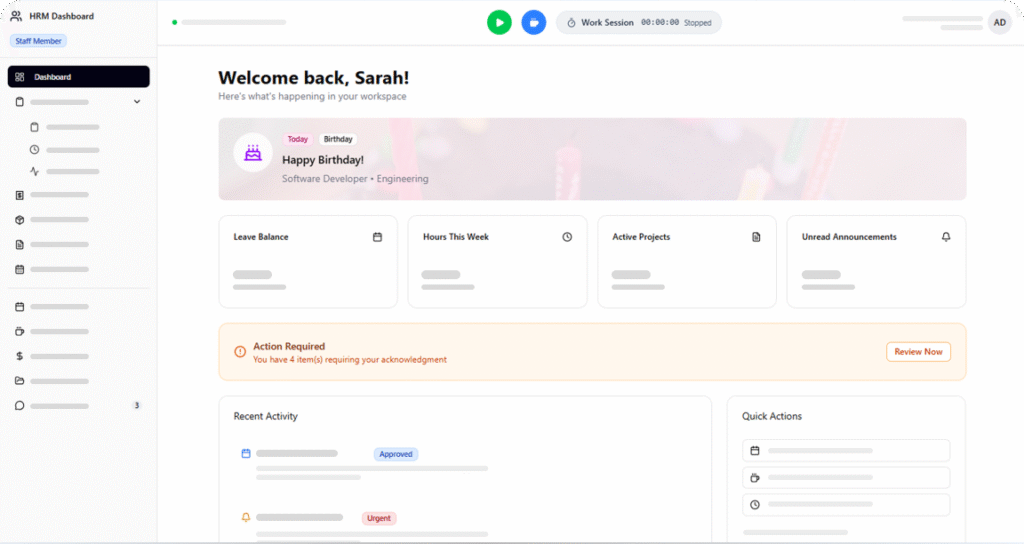
OxHRM helps startups implement and enforce leave policies with ease:
- Flexible Tracking: Supports multiple leave types and accrual rules.
- Automated Rules: Configurable leave policies, approval workflows, and reminders ensure consistent enforcement.
- Real-Time Dashboards: Managers and HR can view leave balances, pending requests, and approvals instantly.
- Self-Service: Employees can apply for leave, view balances, and track approvals via the portal.
- Compliance: Maintains accurate, auditable leave records for payroll and statutory compliance.
- Policy Integration: The leave policy can be published in the digital HR handbook, with employee acknowledgments tracked in the system.
Turning Leave Policy into a Lead Magnet
From this article, you can create a downloadable “Leave Policy Template for Startups India 2025” as a Word or PDF document. Gate it with a simple form Name, Email, Company, Employee Count) and brand it as “Powered by OxHRM”.
Conclusion: Build a Fair, Flexible, and Enforceable Leave Policy
A clear leave policy is essential for any startup in India. It sets expectations, reduces disputes, and ensures payroll accuracy. By combining a well-written policy with a modern HRMS like OxHRM, you can automate leave management, enforce rules fairly, and adapt as your team grows.
If youʼre ready to move from manual leave management to a digital, compliant system, explore how OxHRM can help.
Book a demo or start a free trial of OxHRM today, and make leave management easy for your startup.
Table of Contents

Shafeeq Khan is a web developer who creates modern, responsive, and user-friendly websites with clean code and creative design
Latest Posts
10 Payroll Problems Killing Indian Startups (And HRMS Fixes That Work)
Problem 1: PF/ESI Registration Delays Issue: Startups hit 10+ employees but delay PF/ESI registration. Penalty: 25% interest + fines up...


Multi-State Payroll Calculator for Indian Startups (2026 Edition)
Why Every Startup Needs This Tool Indian startups now operate across states Jaipur HQ hires from Kota, remote workers from...

PF/ESI Audit Preparation Checklist for Indian Startups 2026
Why PF/ESI Audits Are Coming for You 2026 Reality: Labour inspectors now target startups with 10+ employees. Random audits, employee...