How to Set Up HR for Startups in India 2026 Step-by-Step Guide
Why HR Setup Matters for Startups
Setting up HR for your startup in India is not just about hiring and payroll—itʼs about building a strong foundation for growth, compliance, and employee satisfaction. With new labour laws, digital compliance requirements, and evolving work models in 2026, a structured HR process is essential from day one.
This guide covers every step you need to get your HR up and running, from onboarding to compliance, payroll, and policy creation.
Step 1 Define Your HR Needs
Before diving into hiring, clarify your HR requirements:
- How many employees do you need?
- What roles are critical for your business?
- What is your budget for salaries and benefits?
Understanding your needs helps you plan your hiring strategy and set realistic timelines.
Step 2: Create Job Descriptions and Hiring Process
- Write clear job descriptions for each role.
- Define the hiring process: sourcing, screening, interviews, and onboarding.
- Use digital platforms for job postings and candidate management.
A structured hiring process ensures you attract the right talent and avoid mis-hires.
Step 3: Onboard Employees Properly
Onboarding is crucial for employee engagement and retention. Your onboarding process should include:
- Issuing appointment letters and employment contracts.
- Collecting KYC documents PAN, Aadhaar, bank details).
- Providing a welcome kit and induction program.
- Explaining company policies, culture, and expectations.
A smooth onboarding experience sets the tone for your startupʼs culture.
Step 4: Set Up Payroll and Statutory Compliance
Payroll is a critical HR function. In 2026, ensure you:
- Register for PF, ESI, and TDS as per your employee count and salary thresholds.
- Set up a payroll system (manual or HRMS like OxHRM.
- Calculate salaries, deductions, and statutory contributions accurately.
- Issue payslips and maintain payroll records.
Compliance with labour laws is non-negotiable—failure can lead to penalties and legal issues.
Step 5: Create Essential HR Policies
Every startup needs clear HR policies. Key policies include:
- Attendance policy
- Leave policy
- Code of conduct
- Remote work policy
- POSH Prevention of Sexual Harassment) policy
Publish these policies in a digital HR handbook and get employee acknowledgments.
Step 6: Implement Attendance and Leave Management
- Set up an attendance system (manual, biometric, or digital).
- Define leave rules and approval workflows.
- Track attendance and leave digitally to avoid disputes.
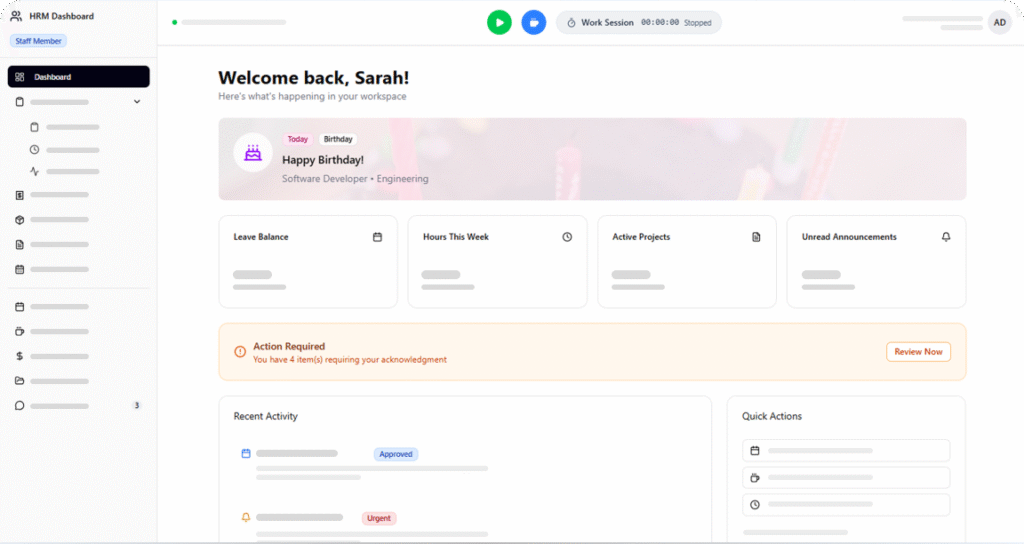
Digital tools like OxHRM make attendance and leave management easy and transparent.
Step 7: Ensure Data Security and Privacy
- Secure employee data with access controls and encryption.
- Comply with data protection laws Digital Personal Data Protection Act 2023.
- Train employees on data security best practices.
Data security is crucial for maintaining trust and avoiding legal risks.
Step 8: Use HRMS for Efficiency
HRMS platforms like OxHRM automate payroll, attendance, leave, compliance, and policy management. Benefits include:
- Time savings for HR and employees.
- Reduced errors and compliance risks.
- Real-time dashboards and analytics.
An HRMS is a smart investment for scaling startups.
Step 9: Monitor and Improve HR Processes
Regularly review your HR processes for:
- Compliance updates.
- Employee feedback and engagement.
- Policy revisions as your business grows.
Continuous improvement ensures your HR remains effective and relevant.
Conclusion: Build a Strong HR Foundation for Your Startup
Setting up HR for your startup in India is a step-by-step process. By following this guide, you can create a structured, compliant, and employee-friendly HR system that supports your business growth in 2026 and beyond.
If youʼre looking for a reliable HRMS to streamline your HR processes, consider OxHRM. Itʼs designed for Indian startups, with features for payroll, attendance, leave, compliance, and more.
Ready to simplify your HR setup? Book a demo or start a free trial of OxHRM today.
Table of Contents

Shafeeq Khan is a web developer who creates modern, responsive, and user-friendly websites with clean code and creative design
Latest Posts

10 Payroll Problems Killing Indian Startups (And HRMS Fixes That Work)
Problem 1: PF/ESI Registration Delays Issue: Startups hit 10+ employees but delay PF/ESI registration. Penalty: 25% interest + fines up...



Multi-State Payroll Calculator for Indian Startups (2026 Edition)
Why Every Startup Needs This Tool Indian startups now operate across states Jaipur HQ hires from Kota, remote workers from...

PF/ESI Audit Preparation Checklist for Indian Startups 2026
Why PF/ESI Audits Are Coming for You 2026 Reality: Labour inspectors now target startups with 10+ employees. Random audits, employee...