How a 50 Person Indian IT Agency Boosted Productivity by 30% with OxHRM in 90 Days
Background: The Agency and Its Problems
“TechWave Digital” (fictional name) is a 50-employee IT services and product agency based in India, working on web apps, SaaS products, and maintenance contracts for global clients.
By early 2026, they faced issues common in growing IT firms:
- Inaccurate or late timesheets affected client billing and internal costing. Similar agencies often report leakage and underbilling when relying on manual timesheets.
- Managers had no real-time view of who was overloaded or underutilized, which is a standard pain point highlighted in HR productivity studies.
- Remote and hybrid employees logged hours in spreadsheets or chat messages, causing disputes and mistrust, a known risk in distributed teams without proper tooling.
- HR juggled separate tools for attendance, payroll, and basic task tracking, creating duplicate data entry and errors—exactly the fragmentation modern HRMS platforms aim to solve.
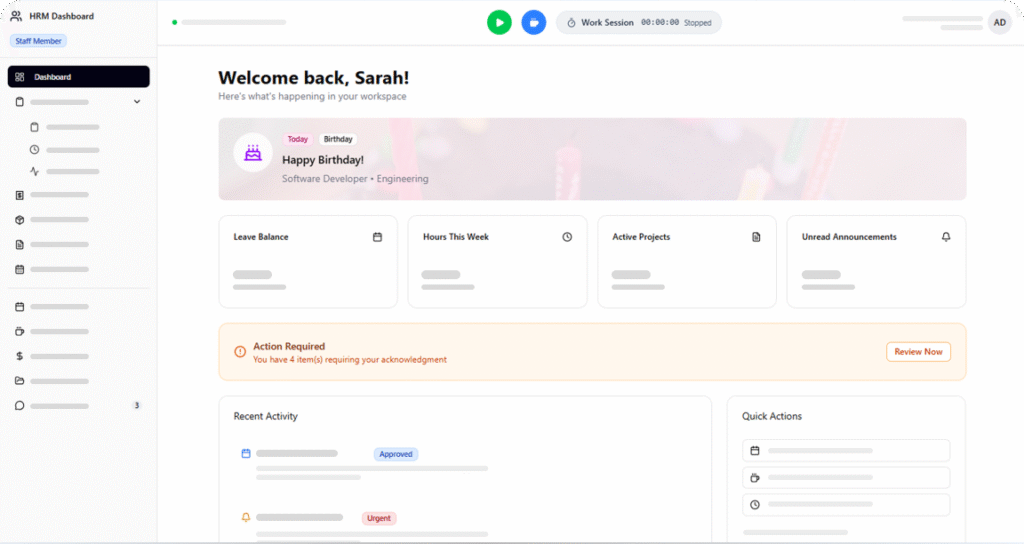
TechWaveʼs leadership wanted a single platform to solve HR basics, handle time tracking and projects, and give management AI-level insights into productivity and capacity, in line with 2026 HR tech trends.
Step 1: Implementing Core HR Payroll as a Single Source of Truth
First, TechWave moved all employee records, attendance, and payroll into OxHRM to create one consistent data layer—a best practice recommended in modern HRMS adoption guides.
They configured:
- Master data: roles, departments, salary structures, PF/ESI/TDS rules in line with Indian compliance norms.
- Attendance: web and mobile punch-in for office/remote, with clear shift and weekly-off rules, mirroring how Indian firms digitize attendance in 2026.
- Payroll: automated salary, statutory deductions, and digital payslips, similar to other leading HR/payroll tools in India.
This removed duplicate spreadsheets and ensured any productivity insights would sit on top of clean, compliant HR data, which AI HR analytics experts call a critical prerequisite.
Step 2: Rolling Out Desktop Time Tracking with Screenshots
Next, TechWave deployed OxHRMʼs desktop time-tracking app across all developers, QA, and designers, following best practices seen in modern screenshot-based tracking tools.
They configured it to:
- Auto-track work time by app/URL and mark idle time after a defined threshold, similar to current market-leading tools.
- Capture periodic screenshots during working hours (e.g., every 10 minutes) to validate billable work, a method widely used by remote-first teams to increase transparency.
- Allow employees to review their day timeline and request edits where necessary—aligning-with trust building recommendations in monitoring software reviews.
Crucially, they published a clear policy explaining what was tracked, when, and why, echoing guidance from productivity and monitoring experts on avoiding surveillance culture.
Step 3: Linking Time Directly to Projects and Tasks
TechWave then used OxHRMʼs project management layer to connect time tracking with real client work, mirroring HRMSPM integration patterns described in recent project integration resources.
For each project, they:
- Created tasks and milestones with estimated hours and due dates.
- Assigned owners and team members.
- Mapped desktop-recorded time blocks (plus screenshots) to specific tasks
This gave them:
- True effort per feature or ticket, similar to how integrated PMHR tools in 2026 calculate task-level costing.
- Up-to-date burn-down charts and variance against estimates, helping PMs intervene before delays became critical.
Step 4: Using AI-Powered HR Analytics for Decisions, Not Just Reports
Once a few weeks of time, attendance, and project data accumulated, TechWave started using OxHRMʼs AI-driven analytics in ways aligned with current HR analytics guidance.
The leadership focused on three dashboards:
1. Utilization & Capacity
- AI models highlighted consistently over-utilized developers (over 120% of planned capacity) and under-utilized ones (under 70%, similar to capacity-planning examples in HR analytics literature.
- This guided workload redistribution and future hiring decisions.
2. Project Risk Signals
- Projects where actual time greatly exceeded estimates, combined with frequent after-hours work and weekend activity, were flagged as “high risk”—a pattern that integration experts say strongly correlates with scope creep and burnout.
3. Engagement & Attendance Patterns
- AI detected rising late-logins and increased idle time in one team, a pattern often associated with low morale or misalignment.
- Management used this as a starting point for one-to-ones and process fixes, rather than immediate discipline.
This moved HR reporting from rear-view (what happened last month) to predictive (where problems are likely to appear), matching the direction experts describe for AI in HR by 2026.
Results After 90 Days
Within three months, TechWave saw measurable improvements consistent with benchmarks reported by adopters of AI-enhanced HRMS and monitoring tools.
- 30% reduction in unbilled effort
Better task mapping and screenshot-validated time meant fewer missed hours in invoices, similar to ROI claims in time-tracking case studies. - 2025% fewer project overruns
Project managers acted earlier on AI risk flags and variance dashboards, as recommended by modern project-
integration guides. - Higher trust and fewer disputes
Because employees could see their own time and screenshots, most disputes were settled in minutes rather than days, echoing best-practice stories around transparent monitoring. - Data-backed hiring decisions
Utilization analytics helped the founders decide to hire two more mid-level developers instead of adding more junior interns, aligning with 2026 advice to let analytics drive workforce planning rather than gut feel.
HR also reported saving several hours a week on manual timesheet chasing and reconciliation, matching productivity gains observed when HRMS replaces spreadsheets.
How to Replicate This in Your Own Company
An Indian IT or services firm can follow a similar path:
- Unify HR Core: Move employee data, attendance, and payroll into one HRMS.
- Deploy Desktop Time Tracking: Use an app with screenshots, idle detection, and employee visibility to raise accuracy and trust.
- Connect Time to Projects: Manage tasks and mapping so every hour has context and cost.
- Turn on AI Analytics: Start with utilization, risk flags, and attendance/engagement signals.
- Set Clear Policies: Publish a transparent monitoring and data-use policy to protect culture and compliance.
This structure mirrors how forward-looking HR tech stacks are being built in 2026 to support remote, hybrid, and outcome-driven work.
Table of Contents

Shafeeq Khan is a web developer who creates modern, responsive, and user-friendly websites with clean code and creative design
Latest Posts
10 Payroll Problems Killing Indian Startups (And HRMS Fixes That Work)
Problem 1: PF/ESI Registration Delays Issue: Startups hit 10+ employees but delay PF/ESI registration. Penalty: 25% interest + fines up...


Multi-State Payroll Calculator for Indian Startups (2026 Edition)
Why Every Startup Needs This Tool Indian startups now operate across states Jaipur HQ hires from Kota, remote workers from...

PF/ESI Audit Preparation Checklist for Indian Startups 2026
Why PF/ESI Audits Are Coming for You 2026 Reality: Labour inspectors now target startups with 10+ employees. Random audits, employee...